Saunas
Infrared vs Traditional Sauna: Which Costs Less to Run
One heats the air to 80-100°C, the other warms your skin at 45-60°C. What that changes: the bill (53p vs £1.58 an hour), the wiring, and the evidence.
Read the guideIndependent UK guides to home saunas and heat therapy.
One heats the air to 80-100°C, the other warms your skin at 45-60°C. What that changes: the bill (53p vs £1.58 an hour), the wiring, and the evidence.
Read the guideThe Shape House is a UK guide to home saunas and heat therapy. Infrared cabins, Finnish rooms, sauna blankets and cold plunge.
The rule on every page is the same. Each figure carries the date it was checked and a link to where it came from. Usually that is a regulator, a published study, or a live retailer listing.
That matters in this market more than most. Sauna listings are full of claims that nobody sources: penetration depths that are off by a factor of a hundred, detox promises the researchers themselves reject, and running costs quoted against a tariff that expired two years ago.
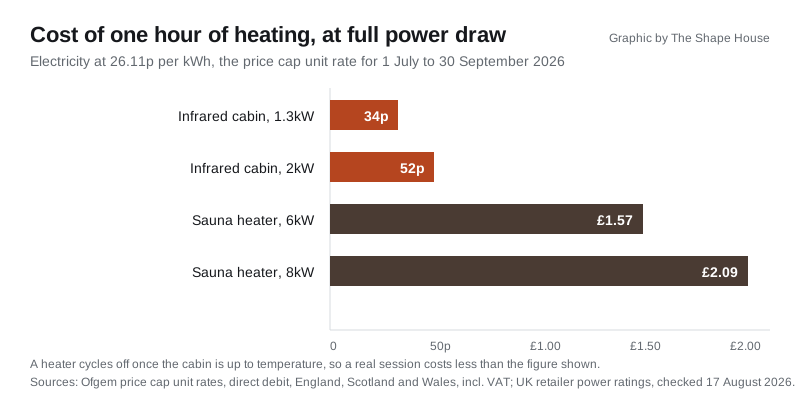
Electricity is 26.32p per kWh for direct debit customers in England, Scotland and Wales. That is the price cap unit rate for 1 October to 31 December 2026, published by Ofgem, and there is no VAT on household electricity from 1 October 2026 to 31 March 2027, so that figure is the whole price. One hour at full power draw:
Heaters cycle off once the cabin is at temperature, so a real session comes in under those figures. The cap changes each quarter, so the rate is worth rechecking before you rely on it.
Regular sauna use has a genuine research base, and it is worth knowing exactly how far it goes.
Where a page here used to carry a claim we can no longer stand behind, we have taken it out rather than softened it. How we work sets out the standard, and about us explains what the site is.